Items filtered by date: September 2021
Pain in the Arch of the Foot
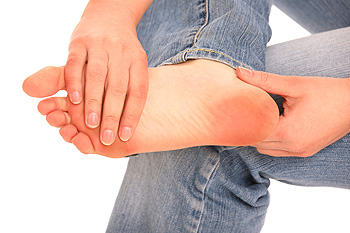 The arch is located near the middle of the sole of the foot. Most people have visible arches that curve upwards and can be seen even when the foot is bearing weight. Some people have flat feet, with either no arches or arches that are only visible when the foot is not bearing weight. Regardless of whether or not you have flat feet, anyone can experience pain on the bottom of the foot in the arch area. The most common cause of arch pain is plantar fasciitis, a condition in which the ligament that runs along the bottom of the foot becomes inflamed due to injury. Other potential causes of arch pain include foot cramps, plantar fibromas, tarsal tunnel syndrome, posterior tibial tendonitis, stress fractures, and acquired flat feet. For more information about arch pain, please consult with a podiatrist.
Plantar fasciitis is a common foot condition that is often caused by a strain injury. If you are experiencing heel pain or symptoms of plantar fasciitis, contact one of our podiatrists from Ankle & Foot Care Center. Our doctors can provide the care you need to keep you pain-free and on your feet.
What Is Plantar Fasciitis?
Plantar fasciitis is one of the most common causes of heel pain. The plantar fascia is a ligament that connects your heel to the front of your foot. When this ligament becomes inflamed, plantar fasciitis is the result. If you have plantar fasciitis you will have a stabbing pain that usually occurs with your first steps in the morning. As the day progresses and you walk around more, this pain will start to disappear, but it will return after long periods of standing or sitting.
What Causes Plantar Fasciitis?
- Excessive running
- Having high arches in your feet
- Other foot issues such as flat feet
- Pregnancy (due to the sudden weight gain)
- Being on your feet very often
There are some risk factors that may make you more likely to develop plantar fasciitis compared to others. The condition most commonly affects adults between the ages of 40 and 60. It also tends to affect people who are obese because the extra pounds result in extra stress being placed on the plantar fascia.
Prevention
- Take good care of your feet – Wear shoes that have good arch support and heel cushioning.
- Maintain a healthy weight
- If you are a runner, alternate running with other sports that won’t cause heel pain
There are a variety of treatment options available for plantar fasciitis along with the pain that accompanies it. Additionally, physical therapy is a very important component in the treatment process. It is important that you meet with your podiatrist to determine which treatment option is best for you.
If you have any questions, please feel free to contact our office located in Jupiter, FL . We offer the newest diagnostic and treatment technologies for all your foot care needs.
What Could Be Causing Pain in My Heel?
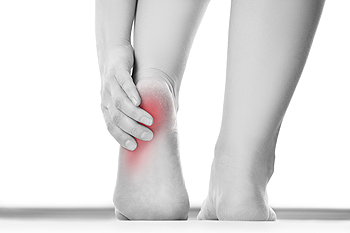
Heel pain is one of the most common reasons why people seek the care of a podiatrist. There are a number of conditions that trigger heel pain, with the leading cause being plantar fasciitis. This is a condition in which the plantar fascia—the long band of connective tissue spanning the bottom of the foot from heel to toe—becomes inflamed and painful from overuse, improper footwear, or other factors. Pain in the back of the heel, where the Achilles tendon attaches to the heel bone, is typically due to overuse and repetitive strain. When the fat pads that cushion the heel bone thin down with age (fat pad atrophy) pain can be felt in the heel. A painful bump or redness at the back of your heel are symptoms of Haglund’s deformity. This condition occurs when a bony enlargement causes inflammation in the soft tissue and bursa sac near the Achilles tendon. Psoriatic arthritis can cause inflammation, stiffness, and pain in joints where tendons and ligaments connect with bones, such as the heel. Heel pain may even be a symptom of heel spurs. If you experience any pain, stiffness, or other discomfort in your heel, make an appointment with a podiatrist who can diagnose and treat your condition.
Many people suffer from bouts of heel pain. For more information, contact one of our podiatrists of Ankle & Foot Care Center. Our doctors can provide the care you need to keep you pain-free and on your feet.
Causes of Heel Pain
Heel pain is often associated with plantar fasciitis. The plantar fascia is a band of tissues that extends along the bottom of the foot. A rip or tear in this ligament can cause inflammation of the tissue.
Achilles tendonitis is another cause of heel pain. Inflammation of the Achilles tendon will cause pain from fractures and muscle tearing. Lack of flexibility is also another symptom.
Heel spurs are another cause of pain. When the tissues of the plantar fascia undergo a great deal of stress, it can lead to ligament separation from the heel bone, causing heel spurs.
Why Might Heel Pain Occur?
- Wearing ill-fitting shoes
- Wearing non-supportive shoes
- Weight change
- Excessive running
Treatments
Heel pain should be treated as soon as possible for immediate results. Keeping your feet in a stress-free environment will help. If you suffer from Achilles tendonitis or plantar fasciitis, applying ice will reduce the swelling. Stretching before an exercise like running will help the muscles. Using all these tips will help make heel pain a condition of the past.
If you have any questions please contact our office located in Jupiter, FL . We offer the newest diagnostic and treatment technologies for all your foot and ankle needs.
Psoriatic Arthritis and Psoriasis
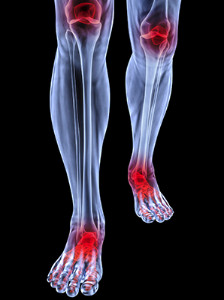
Psoriatic Arthritis (PsA) is a chronic disorder where the body’s own immune system attacks healthy joints and produces inflammation, pain, tenderness, warmth, swelling, and joint damage. Nails can also lift up from the nail bed and become pitted or cracked with white spots. Symptoms are different for everyone—ranging from mild to severe—and may come and go, and even flare on occasion. PsA can occur in the joints of the foot, ankle, and toes—giving them a sausage-like appearance. It may also cause the sole of the foot or heel to ache. Symptoms are typically asymmetrical, meaning they may occur on only one side of the body. Some believe that genetics make some people more susceptible to the disease. These people are at an increased risk of contracting it after being exposed to an infection, physical trauma, or stress. Many people with PsA also have psoriasis—a skin disease causing red, itchy, scaly, and patchy skin. If you feel or see anything that is similar to the symptoms listed here, make an appointment with a podiatrist for an accurate diagnosis and treatment.
Arthritis can be a difficult condition to live with. If you are seeking treatment, contact one of our podiatrists from Ankle & Foot Care Center. Our doctors can provide the care you need to keep you pain-free and on your feet.
Arthritic Foot Care
Arthritis is a term that is commonly used to describe joint pain. The condition itself can occur to anyone of any age, race, or gender, and there are over 100 types of it. Nevertheless, arthritis is more commonly found in women compared to men, and it is also more prevalent in those who are overweight. The causes of arthritis vary depending on which type of arthritis you have. Osteoarthritis for example, is often caused by injury, while rheumatoid arthritis is caused by a misdirected immune system.
Symptoms
- Swelling
- Pain
- Stiffness
- Decreased Range of Motion
Arthritic symptoms range in severity, and they may come and go. Some symptoms stay the same for several years but could potentially get worse with time. Severe cases of arthritis can prevent its sufferers from performing daily activities and make walking difficult.
Risk Factors
- Occupation – Occupations requiring repetitive knee movements have been linked to osteoarthritis
- Obesity – Excess weight can contribute to osteoarthritis development
- Infection – Microbial agents can infect the joints and trigger arthritis
- Joint Injuries – Damage to joints may lead to osteoarthritis
- Age – Risk increases with age
- Gender –Most types are more common in women
- Genetics – Arthritis can be hereditary
If you suspect your arthritis is affecting your feet, it is crucial that you see a podiatrist immediately. Your doctor will be able to address your specific case and help you decide which treatment method is best for you.
If you have any questions, please feel free to contact our office located in Jupiter, FL . We offer the newest diagnostic and treatment technologies for all your foot care needs.
Are You Suffering From Ingrown Toenails?

If left untreated, an ingrown toenail can lead to more serious concerns, such as an infection. Knowing proper nail care can help in the prevention of an ingrown toenail. Give us a call, and get treated!
The Healing Science of Sound Waves
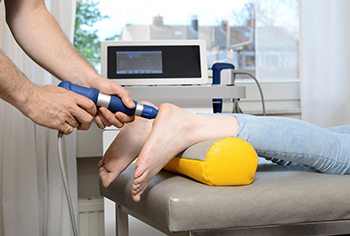
Although the term “shockwave therapy” may sound a little off putting, the science behind it has been used for decades in effective, sound wave treatment for kidney stones (Shockwave Lithotripsy). In soft tissue repair, Extracorporeal Shockwave Therapy (ESWT) has been FDA approved for treating plantar fasciitis—a leading cause of heel pain. ESWT uses high-energy acoustic sound wave impulses to break up scar tissue, reduce pain, and stimulate healing in the damaged and inflamed plantar fascia tissues. ESWT is non-invasive, safe, and effective. If you have persistent pain in your heels, contact a podiatrist for an examination and diagnosis, and to explore whether ESWT may be an option for you.
Shockwave therapy is a treatment commonly used to treat various injuries and conditions, particularly plantar fasciitis in the feet. To learn more, consult with one of our podiatrists from Ankle & Foot Care Center. Our doctors can provide the care you need to keep you pain-free and on your feet.
Shockwave Therapy
Shockwave therapy is a new treatment option designed to treat bone conditions such as tennis elbow, shoulder pain, and others. Shockwave therapy uses high intensity sound waves that are directed to the affected tissues of the body with pinpoint accuracy. The effects are very beneficial, leading to a production of collagen fibers, eliminating inflammation.
Who Benefits from Shockwave?
Shockwave is recommended for patients suffering from heel pain and associated problems. Heel pain is a common condition which can be caused by obesity, overexertion, and spending a substantial amount of time on hard floors with your feet exposed and unsupported.
Fast and Easy
The therapy is actually a simple process that can leave patients feeling better the very next day. Shockwave therapy is not as dramatic as it sounds. It enables more blood flow to effected areas, addressing the source of the problem and allowing treatment to last for a long time.
Treatment & Recovery Time
Shockwave treatment will enable your feet to recover quickly. This is especially important since surgery is not required. It is cost effective and does not require the use of anesthesia. This treatment is a better option to surgery, since it is proven safe.
If you have any questions, please feel free to contact our office located in Jupiter, FL . We offer the newest diagnostic and treatment technologies for all your foot and ankle needs.
